Speakers
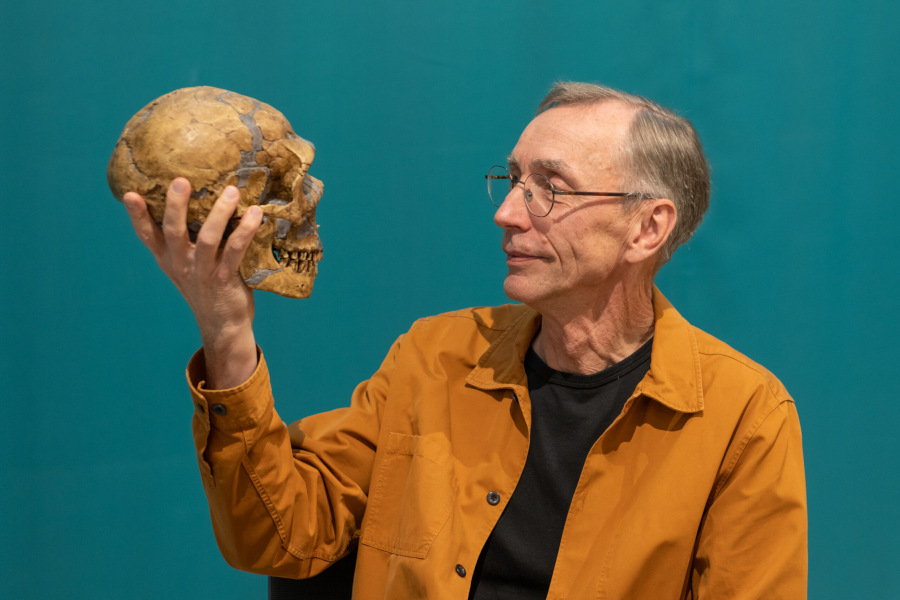
Svante Pääbo (Credit: ©MPI for Evolutionary Anthropology)
Svante Pääbo is a Swedish evolutionary geneticist whose pioneering work gave rise to the field of paleogenomics: the study of ancient DNA to shed light on the evolution of humans and other organisms. As Director at the Max Planck Institute for Evolutionary Anthropology in Leipzig, he led the Neanderthal Genome Project, which achieved the first sequencing of a Neanderthal genome and revealed that Neanderthals and modern humans interbred. His team later discovered a previously unknown hominin, the Denisovans, through DNA extracted from a small bone fragment found in Siberia.
For his discoveries concerning the genomes of extinct hominins and their influence on modern humans, Pääbo received the 2022 Nobel Prize in Physiology or Medicine. His work continues to reshape our understanding of what makes us uniquely human, and how the legacy of our extinct relatives lives on within our DNA.
International Symposium on ancient biomolecules
“Unfolding our history through ancient biomolecules”
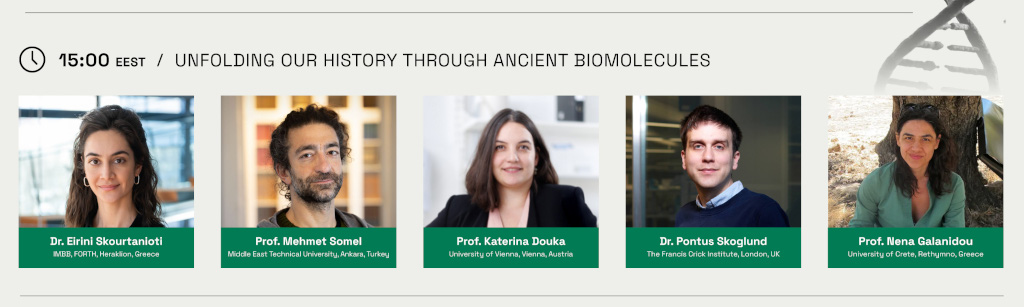
(Junior group leader, IMBB-FORTH, Heraklion) |
Ancient human genomics and the population history of the Aegean | ||
(Professor, Middle East Technical University, Ankara) |
Ancient human genomics and the population history of Anatolia | ||
(Associate Professor, University of Vienna, Vienna) |
Paleoproteomics of hominin fossil record and radiocarbon dating | ||
(Senior group leader, the Francis Crick Institute, London) |
Host-pathogen ancient genomics and dog domestication | ||
Moderator: |
(Professor of prehistoric archaeology, University of Crete) |
Deadlines:
Registration deadline for International Symposium: 28/9/2026, 12:00 EEST
Registration deadline for Kafatos lecture: 09/10/2026